
Speaking and Workshops
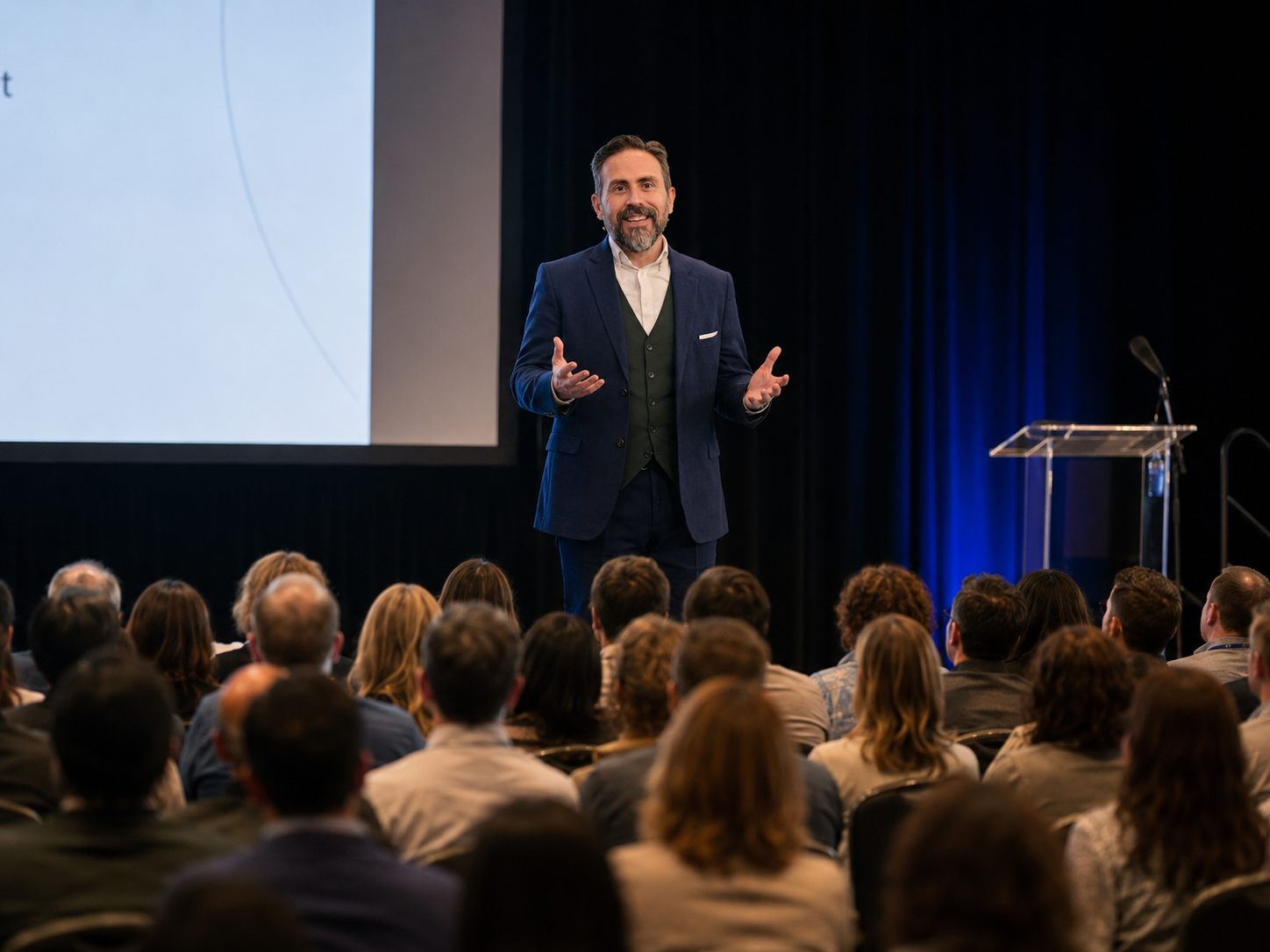
Practical ideas. Honest conversations. Tools leaders can use immediately.
A good speaker should do more than hold an audience’s attention. A good workshop should do more than fill a block of time on the agenda. People should leave thinking differently, talking more honestly, and knowing what they can do next.
My speaking programs combine more than 20 years of HR and leadership experience with candid advice, realistic workplace examples, and enough humor to make difficult subjects easier to discuss.
The programs are designed for managers, executives, HR professionals, hiring leaders, and organizations that want practical development—not another presentation full of leadership slogans everyone has already heard.
Featured Speaking Topics
My programs focus on the workplace situations leaders actually encounter. The tone is direct but constructive.
The objective is not to embarrass people, criticize managers, or pretend every workplace problem has an easy answer. It is to help participants recognize what is happening, understand why it matters, and respond more effectively.
-
A candid conversation about individual value, organizational reality, and healthy leadership.
Employees are important, but no individual is that important.
This presentation explores the tension between valuing employees and helping them understand that individual preferences, goals, and contributions exist within a larger organizational mission.
The message is direct, but the purpose is constructive: healthier expectations, stronger accountability, better perspective, and less workplace drama.
Based on the upcoming book, You’re Not That Important: And 9 Other Conversations to Have with Your Employees, this program examines why managers avoid necessary conversations and what that avoidance costs employees, teams, and organizations.
Key Takeaways
Participants will learn how to:
Separate personal value from organizational indispensability.
Discuss disappointment without dismissing employees.
Explain decisions that cannot satisfy everyone.
Address entitlement and unrealistic expectations constructively.
Recognize when ego is affecting leadership decisions.
Maintain perspective during conflict and change.
-
Managers frequently know when a conversation needs to happen; they just don’t know when.
As a result, they soften the message until it disappears. They hope the problem corrects itself.
It usually does not.
Based on the upcoming book, You’re Not That Important: And 9 Other Conversations to Have with Your Employees, this presentation examines why managers avoid necessary conversations and what that avoidance costs employees, teams, and organizations.
Participants learn that clarity is an act of leadership and to replace ambiguity with respectful clarity addresses difficult issues before they become larger ones.
Key Takeaways
Participants will learn how to:
Recognize when a conversation should no longer be delayed.
Begin difficult conversations without excessive buildup.
Communicate expectations clearly and respectfully, addressing performance, behavior, and accountability.
Respond when an employee becomes defensive or emotional.
End conversations with clear expectations and next steps.
-
Managers often believe they have communicated clearly when they have actually provided suggestions, clues, or carefully softened observations.
The employee hears, “This is something you might consider.”
The manager believes they said, “This must change.”
Weeks later, both are frustrated.
This presentation shows how vague communication creates performance problems, weakens accountability, and damages trust. Participants learn how to communicate expectations directly without becoming aggressive or disrespectful.
Key Takeaways
Participants will learn how to:
Distinguish feedback from an actual performance conversation.
State expectations in observable terms.
Avoid language that unintentionally weakens the message.
Confirm that the employee understands what must change.
Establish ownership, timelines, and follow-through.
Balance candor with dignity and respect.
-
Organizations spend considerable effort creating strategic plans. Then everyone returns to work.
This presentation examines why strategies lose momentum and how leaders can translate broad priorities into ownership, decisions, measurable actions, and visible progress.
Key Takeaways
Participants will learn how to:
Reduce an overwhelming strategy to a manageable set of priorities.
Translate organizational goals into team-level actions.
Establish clear ownership for strategic initiatives.
Create measures that help rather than distract.
Communicate strategy in language employees understand.
Maintain accountability after the initial enthusiasm fades.
-
Engagement surveys, recognition programs, communication campaigns, development opportunities, and culture initiatives all matter.
But an employee’s daily experience is still heavily shaped by the person who assigns the work, provides feedback, recognizes contributions, communicates decisions, and responds when something goes wrong.
This program explores the practical behaviors managers can use to improve engagement even when raises, promotions, and additional resources are limited.
Key Takeaways
Participants will learn how to:
Understand the manager’s role in the employee experience.
Build recognition into normal management practices and translate engagement survey results into daily leadership behaviors.
Improve communication without creating more meetings.
Support development when promotions are limited.
Identify preventable sources of employee frustration.
-
I specializes in all things Human Resources and Business Strategy but am especially passionate about employee communication, engagement, expectations, and training supervisors. Custom presentations within these areas are easy to put together based on your needs.
Available Speaking Formats include
Keynote - An engaging, thought-provoking presentation designed for conferences, organizational events, leadership meetings, and professional associations. Typical length: 45–75 minutes.
Conference or Breakout Session - A focused session that explores a specific leadership, HR, recruiting, or communication challenge. Typical length: 45–90 minutes.
Leadership Team Session - A more focused and interactive conversation for executives, senior leaders, HR teams, or management groups. Typical length: 60 minutes to half a day.
Customized Presentation - A program developed around your organization’s current challenges or strategic priorities. Time will vary based on needs.
Workshops
A presentation can introduce an idea. A workshop gives participants the opportunity to apply it. Workshops are designed for organizations that want managers and HR professionals to leave with specific tools, stronger skills, and a plan for using what they learned.
The purpose is to give them a safe, structured way to think through situations before they encounter them at work.
-
This workshop gives participants a practical framework for planning and leading conversations about performance, behavior, accountability, conflict, disappointment, and change.
Participants work through realistic scenarios and learn how to identify the central message, anticipate likely reactions, avoid common communication mistakes, and end with clear next steps.
Workshop Content May Include:
Why managers avoid difficult conversations.
Determining what actually needs to be said.
Opening the conversation clearly.
Addressing defensiveness, anger, silence, or disagreement.
Separating facts, assumptions, and emotions.
Establishing expectations and consequences.
Documenting and following up appropriately.
Preparing for an actual upcoming conversation.
-
This workshop prepares recently promoted and developing supervisors for the everyday responsibilities of managing people.
It focuses on the practical transition from performing the work to leading others who perform it.
Workshop Content May Include:
Moving from peer to supervisor.
Establishing credibility.
Setting and communicating expectations.
Delegating effectively.
Giving feedback and recognition.
Addressing early performance concerns.
Managing former coworkers.
Avoiding favoritism and inconsistency.
Working effectively with HR.
Creating a personal management plan.
-
This workshop helps managers understand how their decisions, communication, recognition, feedback, and consistency shape the employee experience.
Rather than creating another list of large organizational initiatives, participants identify practical actions within their control.
Workshop Content May Include;
What engagement is—and what it is not.
The manager’s influence on engagement.
Recognition that feels authentic.
Communication during uncertainty.
Employee development without guaranteed promotion.
Workload, trust, and perceived fairness.
Responding to engagement survey results.
Creating team-level engagement commitments.
-
Hiring managers influence how quickly the process moves, how candidates are evaluated, and whether strong applicants remain interested.
This workshop gives managers a structured, practical approach to defining the need, reviewing applicants, conducting interviews, evaluating evidence, and making stronger selection decisions.
Workshop Content May Include:
Defining what the position actually requires.
Separating preferences from qualifications.
Understanding the candidate audience.
Creating useful interview questions.
Conducting structured interviews.
Evaluating evidence consistently.
Avoiding common selection biases.
Improving the candidate experience.
Moving quickly without lowering standards.
Partnering effectively with recruiters and HR.
-
Not every organizational challenge fits neatly into a standard program.
Workshops can be customized around:
Performance management.
Accountability.
Employee recognition.
Manager communication.
Organizational change.
HR credibility and service.
Talent acquisition strategy.
Structured interviewing.
Employee retention.
Policy implementation.
Leadership alignment.
Strategic planning and execution.
Workforce challenges specific to higher education.
A difficult issue your managers are currently facing.
Customized programs can incorporate your organization’s terminology, policies, strategic priorities, employee feedback, and realistic workplace situations.
The goal is not to place your logo on a generic slide deck. The goal is to create a program that feels relevant because it is relevant.
-
Half-Day Workshop
A focused introduction to the concept with discussion, examples, planning tools, and application exercises.
Full-Day Workshop
A deeper experience with multiple scenarios, guided practice, feedback, and individual action planning.
Multi-Session Program
A series that allows participants to learn one component at a time, apply it at work, and return to discuss challenges and build additional skills.
Leadership Team Workshop
A customized session that establishes expectations for how leaders across the organization will address the concepts.